Two days ago, I reached my 76th year, and had a beautiful day.
I’m always amazed at the goodness of God, at God’s mercy, His faithfulness in my life, and that HE loves me. His Banner over me is always love. That sits deep in the corners of my heart and gives me the freedom to be authentic.
As I walk through my day today, The Road Not Taken by Robert Frost accompanies me. I first learned this poem by memory when I was seventeen. I was getting ready to go to the university. I had a lot of goals I wanted to accomplish. Surprisingly, I still have lots of goals. My life is not dull or boring, and for that I am thankful.
I have traveled to many places in Europe and have also visited many states in the USA and Canada.
Life has challenged me, and it continues to challenge me to keep learning and moving forward to achieve the things I want, regardless of what others may think.
I’ve made mistakes, fallen on my face, but God places the solitary in families, according to Psalm 68:5-6, and I have been placed in many families in Europe, the USA, and Canada, who are there to encourage me and to lift me up. They see the real me, not the author, writer, or singer. They see me as I am in the best and worst of times. And for that, I am genuinely thankful.
So, I close by saying thanks to all of you for showing me love and for stopping by to wish me the best.
I close with one of the foundational stones that continues to mark my life.
This is a small snippet out of the Anthology I am gathering from my Flash Fiction stories. Each story is limited to 500-1500 words and will be released in winter 2026.
EXCERPT
Lionel didn’t answer. He walked to their bathroom to shower, leaving her lying on their bed. Sade turned on her side and watched him. His back toward her, she wondered why she had married him in the first place. It had taken him three and a half years to build the bridge of callousness she tasted in her mouth. She felt the rejection in her heart. The repudiation of who she was gnawed at her conscience. She placed her right palm on her slight bulge. He didn’t care that she was twenty weeks pregnant. Girdles and corsets, wide dresses, and baggy pants couldn’t hide her weight gain. Her bulging breasts were also noticeable. Lionel didn’t find it funny and told her she looked like a hippopotamus. He found it revolting and told her so.
I am finishing my Novella, which will be released between April 15 and May 5, 2025. It is Romantic Women’s fiction with bits of drama, suspense, humor, and sensuality.
Blurb:
Gioacchino Tarinni needed to figure out who or what he was. Born savant with Autism Spectrum Disorders that labeled him as unusually bright, he lacked any type of social, emotional, or spiritual graces that would qualify him as being human. He was peddled between medical offices and laboratories as doctors and scientists deciphered whether he could be considered as human. So far, he has failed in every experiment except for his friendship with his friend, manservant, and chauffeur, Ferro. Psychiatrists and Sociologists have yet to find out how that developed.
Seated with Ferro at a cafe, Gioacchino focuses on a woman engrossed in her tablet. He attempts to count the braids on her head while sitting at a table on the other side of the room, but her frequent head movements foil his efforts each time. Annoyed at her not keeping her head still, he gets up and goes to her table to command her not to move. However, the displeasure on her face at his interruption fascinates him, and in a moment of impulsive audacity, he proposes marriage instead.
Excerpt:
A wife of noble character who can find?
She is worth far more than rubies.
Her husband has full confidence in her and lacks nothing of value.
She brings him good, not harm, all the days of her life.
—Proverbs 31:10–12
Gioacchino Tarinni’s speedometer hit 280 kmh on Interstate 3 heading to Frankfurt International Airport. Traffic was heavy. Approaching the exit leading to the departure terminal for Lufthansa, he drove into a sharp curve, his car leaning to the left on two wheels. His tires screeched, and Ferro, his long-time friend, manservant, and chauffeur, fell against his right shoulder. Gio skidded to the boardwalk of the Lufthansa’s check-in for outbound flights going to London Heathrow and stopped the car abruptly. Leaving the engine running, he jumped out, commanding Ferro to get behind the steering wheel and to remain near so he could spot him when he returned with Jediah.
The only thing that mattered to Gioacchino was stopping his wife. She would always be his utmost concern. Six months of marriage had taught him that she could be stubborn if she wanted to. When she tried to leave him the first time, he’d resorted to drastic measures and called the chairman of the board of directors at the airport. The plane take-off was delayed. Gioacchino had entered the first-class section and saw the brown, velvet pieces of cloth knitted together and sitting quietly, waiting for the plane to close its doors so it could move to the runway. Her eyes met his, and she stood up without a word and walked to him with her brown, velvety arms flapping like bird wings.
He had desired to reach out, take those dark pieces of cloth in his arms, and hold them close to his heart as he did at home, but he didn’t want to create a disturbance. So he put his hand gently around her luscious waist and let his fingers feel her softness as he led her out of the plane.
The stewardess looked frightened, but Jediah told her she had nothing to fear, that her husband’s mental processes had failed to register that she had planned to take a trip. Gioacchino snorted. That was a lie. A savant autistic whose intelligence had been measured at 220 in mathematics and aerodynamics and 125 in all other areas of the autism scale, he didn’t understand people at all. But Jediah was an exception. He needed her to help him break out of the mold that characterized him as a robot incapable of relating to others emotionally, socially, sexually, and spiritually. According to tests taken in these areas, he had zeroed out completely. For Gioacchino, Jediah had lied, and a lie was a lie. There was no such thing as strategic lying based on diplomacy. His doctors labeled him a robot born with human skin and a strong heart that beat to keep him alive.
It doesn’t take Chance Mancini long to accept that she’s allowed herself to fall in love with Gavino Mancini, a man much younger than she. To make matters worse, after their marriage, he’s led her into a lifestyle she has come to love. He is her, Sir.
All is well until she finds out she can’t give him a family, and insecurity about their relationship haunts her.
Chance runs away, only to be terrorized every night in her sleep by her dreams. Three years later, Gavino Mancini enters her life again to repossess what belongs to him––her heart and her body.
EXCERPT
Chance gasped when Gavino Mancini came out into the open. Shock reverberated through her body. Overcome with guilt about the way she had left him; her eyes trailed their way down from his face to his neck. Once upon a time, she had delighted in planting kisses on the tanned column of his neck between his ear and shoulder. Instinctively, she bowed her head in the presentation pose he had taught her. She shivered as she remembered how she loved standing on her tippy toes to kiss his shoulders, his neck, and his chin, after he had given her permission to touch him. He would then reach out and pull her close to him and lift her up so that she could reach his mouth and drape his body with hers. At night, those same shoulders became her pillow after he finished making love to her. She would fall into a deep sleep listening as he whispered repeatedly, I love you.
I do my best not to get involved in other peoples’ affairs. If I do, I find myself going down a dark rabbit hole that is mostly not good. That doesn’t mean that I close my eyes to the world, but I choose very carefully the battles I want to fight, even though I may feel justified to say something, especially when someone treats me unjustly. I have learned and am still learning how to talk it out with the Silent Guide that walks beside me.
Thus, by not saying anything, I have saved myself lots of energy that I can invest into people that give me much joy. I confess this was a hard lesson to learn.
Yesterday, I listed the things I want to accomplish this week. My list is ongoing. It isn’t written in stone because new things come up each day when I wake up and open myself to the still inner voice within me, like two of my besties’ birthdays and a lovely Sanddorn tea and a Holunder tea that I picked up before going to my office. Drinking a hot cup of one of those teas makes my day when I take a break. So my list has grown.
This week, I will do the following:
Revise the first 10K of my new novel. It usually takes me at least four to six days to revise 10K. I like to send her what I call my final draft so that she understands the direction I’m moving in.
I have a letter to write. I had decided to wait until after the Challenge, but my gut is telling me to do it now, which is what I will do.
Answering emails and text messages, Daily
Attend my writing classes and do my homework,
Go to the bakery,
Pick up fresh fruits,
Do the accounting books for the Romantic Women Fiction Chapter of the RWA,
Visit each blog in the Day 8 Challenge of A DAY IN MY LIFE.
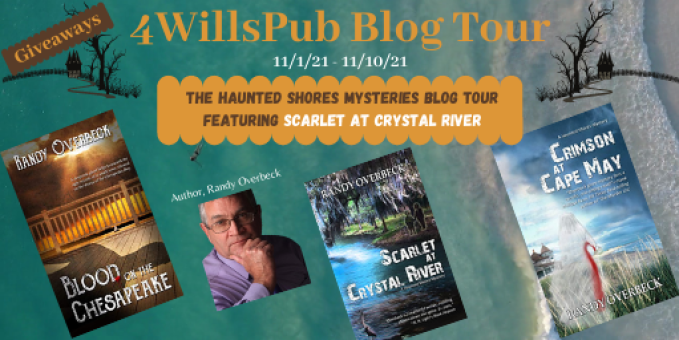
GIVEAWAY: $25 Amazon Gift Card & 1 e-book or paperback copy of one book in the Haunted Shores series (Winner’s choice). Simply leave a comment below for your chance to win!
WORDS STILL MATTER
Words still matter. Perhaps, now more than ever.
What we say and what we write carries weight, makes a difference. A few words from a president can set off alarm bells. A phrase from the fed chairman can make the stock market soar or ignite a selling spree. And it’s not just the words of major players. Dangerous misinformation shared on social media platforms actually cost lives.
Our words can wound or heal, can obscure or reveal. We’ve learned long ago the saying, sticks and stones can break out bones, but words can never hurt us, is clearly not true.
Words matter, still.
So when I set off to write my novels, I pay special attention to my words…and what I choose to write about. I’m not naïve. I realize readers pick up my Haunted Shores Mysteries looking for puzzling whodunits or perhaps hoping to get away to one of my incredible locations or even to experience a little “who-hoo.”
But my novels are about more than cold case murders, a ghost or two, a thread of romance or even breathtakingly beautiful resorts. I’m also careful to structure my narrative to tell a larger truth. A truth about us, about our society, about how we treat each other. In the first two entries, my plots entwined with the issues of racial injustice (BLOOD ON THE CHESAPEAKE) and human trafficking (CRIMSON AT CAPE MAY).
In the third installment, SCARLET AT CRYSTAL RIVER, I have my sights set on an equally compelling social issue, one not very well understood by most Americans. As Darrell tries to unravel the mystery behind the disappearance of two young Latino children, he is thrust in the middle of our “immigrant problem,” as they might say on the news. As I completed my research for this novel, which takes place more than twenty years earlier, I was amazed how little has changed on this issue. As a nation we’re still struggling today much the same way we were in 2000 with how we deal with “the hungry, the poor, yearning to be free” as is inscribed on the Statue of Liberty.
My words are not intended to persuade anyone. Rather, like my efforts in CRIMSON about human trafficking, I’m hoping my writing may cause readers to pause and want to learn more, this time about the plight of migrant workers—and not simply accept the soundbites about the issues on TV or social media.
I hope my words matter.
“One thing that is particularly special about Overbeck’s books is that they unabashedly tackle social issues within their plots. Already having discussed racism and human trafficking in his first two books, “Scarlet at Crystal River” once again forces readers to confront a particularly pervasive and dangerous social issue. This book, in particular, touches upon the dangers of racism and xenophobia, as well as emphasize the often-ignored plights of the hundreds of thousands of migrant workers who are the reason we are able to have such a variety of fruits, vegetables and other resources in our daily lives.”—ReaderViews
Bio
Dr. Randy Overbeck is an award-winning educator, author and speaker. As an educator, he served children for four decades in a range of roles captured in his novels, from teacher and coach to principal and superintendent. His thriller, Leave No Child Behind (2012) and his recent mysteries, the Amazon No. 1 Best Seller, Blood on the Chesapeake,Crimson at Cape May and Scarlet at Crystal River have earned five star reviews and garnered national awards including “Thriller of the Year–ReadersFavorite.com, “Gold Award”—Literary Titan, “Mystery of the Year”—ReadersView.com and “Crowned Heart of Excellence”—InD’Tale Magazine. As a member of the Mystery Writers of America, Dr. Overbeck is an active member of the literary community, contributing to a writers’ critique group, serving as a mentor to emerging writers and participating in writing conferences such as Sleuthfest, Killer Nashville and the Midwest Writers Workshop. When he’s not writing or researching his next exciting novel or sharing his presentation, “Things Still Go Bump in the Night,” he’s spending time with his incredible family of wife, three children (and their spouses) and seven wonderful grandchildren.
All Darrell Henshaw wanted was to enjoy his honeymoon with his beautiful wife, Erin, in the charming town of Crystal River on the sunny Gulf Coast of Florida. Only a pair of ghosts decide to intrude on their celebration. And not just any ghosts, the spirits of two young Latino children. Unwilling at first to derail the honeymoon for yet another ghost hunt, Darrell finally concedes when a painting of the kids comes alive, weeping and pleading for his help.
When he and Erin track down the artist, they discover the children’s family were migrant workers the next county over. But when they travel there, their questions about the kids gets their car shot up and Erin hospitalized. Torn between fear and rage, Darrell must decide how far he will go to get justice for two young children he never even knew.
Tagline
Darrell and Erin thought they were heading to Florida for a carefree honeymoon, but the ghosts of two immigrants children haunt them, pleading for help.
Trailer
Review Blurbs
“Scarlet at Crystal River is an eerie paranormal mystery I couldn’t stop reading. Randy Overbeck is a masterful writer of the paranormal, drawing the reader in before instilling shivers down the spine. 5+ stars.” –N. N. Light’s Book Heaven
“A rollercoaster of a mystery, hurtling up and down hills and sharp corners until the very end, when the reader is left slightly breathless, waiting for their hearts to beat back to a normal rhythm.★★★★★—ReadersView
“Scarlet at Crystal River is a suspenseful paranormal novel with compelling characters and an enigmatic mystery that drives the story to a riveting conclusion. Overbeck is a master at building tension–-this is easily a one-sitting read.”★★★★★—Literary Titan
“This is another masterpiece from Randy Overbeck. His excellent writing style has left me speechless for one more time. He writes in a way that makes you feel what the characters feel and you have no choice but to partake in the journey with them.” ★★★★★—Ioanna’s Reviews, Greece
My main intention with A Gost and His Gold was to describe the events and circumstances of the Second Anglo Boer War which resulted in the anger and resentment that remained among the different cultures and populations after the war and set the stage for the future of South Africa.
Gold, and people’s desire for wealth, is a repeated theme of this book and is included in the title, together with ghost as this book is historical but has a strong supernatural thread.
I had the general themes for A Ghost and His Gold in place prior to starting the writing of this book and I expanded them as it progressed. The main themes are as follows:
The impact of greed and corruption on countries and people;
Bad decision making and their effect on soldiers and civilians;
Evil perpetuating the development of hatred and evil;
The effect of war on the political and social development of a country;
The individual mindset versus the group mentality including pro-war propaganda;
Death; and
The reality of war
This is an extract from one of the war scenes during the siege of Mafeking which illustrates some of these themes:
“The stench of sweat and tension hung in the air as the camp waited silently and watchfully in the cold. My taut nerves made me certain that vengeful eyes were watching us from the cover of the surrounding vegetation. I twisted my head this way and that, looking for any signs of movement in the heavy darkness. I saw nothing. The only sounds were the heavy breathing of my comrades and the crunch of hard ground as they shuffled their feet.
At 4.30 a.m. the bark of the first gun rent the cold early morning air. It was still dark, and the flash shone brightly, momentarily dazzling us. Shells from the 7-pounders followed, soaring through the air and exploding around the target in brilliant flaming balls.
“The railway line’s been pulled up about half a mile from here.”
The news travelled along the lines of men, just as C Squadron prepared to charge forward.
“The armoured train isn’t coming.”
I watched C Squadron surge forward as a mass, each man focusing on his own steps, knowing that if he fell, he would be trampled by those coming afterwards.
This is it, I thought as my men readied themselves to follow. There is no flight option left. Now we must fight to win or be slaughtered like pigs.
I ran, legs pumping and bayonet held at the ready, to the discordant notes of the supporting artillery guns and the Maxim which intensified the din and swirled around me like an insane orchestra. I was conscious of the men of my squadron around me, as well as those of C Squadron about three hundred yards ahead of me.
A great surge of comradery surged through me as these men, my brotherhood, charged forward through the smoke, directly into a hail of bullets from the Boer musketry. Death seemed certain, but, at this precise moment, this did not matter to me; a cloud of red anger and lust for blood having descended over my mind.
The anger prevented fear and grew in its intensity as the occasional figure, including that of Captain Fitzclarence, dropped around me in small explosions of red.
C Squadron reached the fort, which was hidden by bushes, and the guns roared; the sound of the discordant orchestra growing and swelling. My men and I slowed our forward momentum as we watched more ghostly forms falling, to lie in ghastly bleeding piles on the ground.
The few men still standing started to fall back, shouting at my squadron to follow suit.
“The walls are too high … Impossible to mount without scaling ladders.”
Their shouts filled the air, mingling with the gunfire and moans, groans and cries of the wounded.
One of my men, William, and I picked up Captain Fitzclarence as we slowly and deliberately retraced our steps. The blood lust had faded from the men’s eyes and their moods had turned sullen. Expressions of dejection had settled on some faces.
The Boers stopped their fire as soon as the retreat commenced, and the resultant silence felt heavy on me, like a shroud. This behaviour by the Boers reinforced my belief that they are decent men. They could have picked a lot more of us off during this retreat if they’d kept shooting.
Moving backwards, lugging the heavy body, was immeasurably hard. My overtaxed leg and back muscles trembled, and my sweat slicked hands slipped and slid under the captain’s arms. I expelled a huge sigh of relief when William and I were finally able to lay our burden down at a designated spot near to the stranded armoured train. My legs refused to hold me up any longer and I sank to my knees.
That was when I noticed the blood. A bullet had grazed my chest and I hadn’t even noticed. Blood had stained my shirt and was running down into my trousers. It was strange how the moment I saw the blood immense pain seared the right hand side of my chest. It was like being slammed with a club.”
GIVEAWAYS: (4) e-book copies of A GHOST AND HIS GOLD
BOOK BLURB:
After Tom and Michelle Cleveland move into their recently built, modern townhouse, their housewarming party is disrupted when a drunken game with an Ouija board goes wrong and summons a sinister poltergeist, Estelle, who died in 1904.
Estelle makes her presence known in a series of terrifying events, culminating in her attacking Tom in his sleep with a knife. But, Estelle isn’t alone. Who are the shadows lurking in the background – one in an old-fashioned slouch hat and the other, a soldier, carrying a rifle?After discovering their house has been built on the site of one of the original farms in Irene, Michelle becomes convinced that the answer to her horrifying visions lie in the past. She must unravel the stories of the three phantoms’ lives, and the circumstances surrounding their untimely deaths during the Second Anglo Boer War, in order to understand how they are tied together and why they are trapped in the world of ghosts between life and death. As the reasons behind Estelle’s malevolent behaviour towards Tom unfold, Michelle’s marriage comes under severe pressure and both their lives are threatened.
AUTHOR BIO:
Roberta Eaton Cheadle
Roberta Eaton Cheadle is a South African writer and poet specialising in historical, paranormal, and horror novels and short stories. She is an avid reader in these genres and her writing has been influenced by famous authors including Bram Stoker, Edgar Allan Poe, Amor Towles, Stephen Crane, Enrich Maria Remarque, George Orwell, Stephen King, and Colleen McCullough.
Roberta has short stories and poems in several anthologies and has 2 published novels, Through the Nethergate, a historical supernatural fantasy, and A Ghost and His Gold, a historical paranormal novel set in South Africa.
Roberta has 9 children’s books published under the name Robbie Cheadle.
Roberta was educated at the University of South Africa where she achieved a Bachelor of Accounting Science in 1996 and a Honours Bachelor of Accounting Science in 1997. She was admitted as a member of The South African Institute of Chartered Accountants in 2000.
Roberta has worked in corporate finance from 2001 until the present date and has written 7 publications relating to investing in Africa. She has won several awards over her 20-year career in the category of Transactional Support Services.